
The Resort has already celebrated the 750 th anniversary
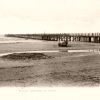
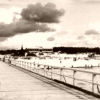
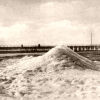
Palanga settlement, first mentioned in 1253, was a significant trading and pagan center in the Middle Ages. In the first half of the XIX c it was known as a seaside resort. News about new treatment methods without a doctor spread quickly. Popularity of Palanga increased after the visit of well-known Polish writer Adam Mickevich in 1824. Soon Palanga became so popular that all local houses, huts and garners were occupied with vacationers.
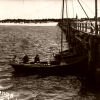
Due to the earls Tiskeviciai, Palanga became a real resort. In the eighties of the XIX th c earl Juozapas Tiskevicius made huge investments in the future resort: in 1877-1880 he opened a spacious restaurant and the first hotel, which was called The Kurhauz, a few summer house complexes were built, a summer theatre was established, stroll paths in the forest were laid, bathing cabins on the beach and bathing places with marble baths and heated water were built. In order to make a landing-stage, a sea bridge was built in 1884-1888. Soon it became one of the most popular attractions and symbols in Palanga resort. Earl Tiskevicius established a resort, which was very popular among rich people from various Russian provinces and, therefore, created competition to Klaipeda.
After the death of earl Juozapas Tiskevicius, his son Feliksas Tiskevicius inherited Palanga. In the southern end of Palanga he built a new palace and formed a remarkable English-style park around it. The park has been diligently preserved until now, therefore, it is very popular among citizens and guest of Palanga. The Tiskeviciai family continued to have new resort territories planted, summer-houses and warm bathing-places built and specialized healing-homes established. Many of these buildings have been preserved till now. They decorate the old Palanga and serve the vacationers' needs.
In the beginning of the XX c Palanga equaled the best German resorts, its beach was equipped following the best foreign examples. Palanga had a gymnastics and orthopedics house with massage specialists and solarium equipped there. During the high season local doctors and those from Vilnius, Warsaw and Lodze took care of the vacationers' health. Every day a wind-orchestra gave concerts in the park and beach. In the Kurhauz there was a café with billiards, a playing-room and a reading-room. In the town there were grounds for gymnastics, tennis, football, bowling and basketball. Sight-seeing services on horses were provided. Palanga resort was recommended for those who suffered neurasthenia and indigestion, for women who had gynecological diseases and for children who were physically weak or exhausted after long periods of illnesses, who had rachitis or chronic catarrh. People traveled to Palanga to strengthen their bodies after injuries or surgeries and to find peace after psychical weariness, here they found fresh air, peace and quietness.
During the years of the first independence, Palanga became informal summer capital of Lithuania. In the third and fourth decades of the XX c wealthy Lithuanians were purchasing land from earl F.Tiskevicius and building summer houses and villas. Presidents of Lithuania Antanas Smetona and Aleksandras Stulginskis, famous Lithuanian artists and intellectuals used to spend their holidays in Palanga. Ministers used to come here for weekends and sometimes even held the meetings of the Ministers' Cabinet.
During the Soviet time the resort area expanded, many departmental rest houses and sanatorium were erected, a number of public eating places were built. An airport was built to serve the resort needs. Palanga was made one of the most significant Baltic seaside resorts in the Soviet Union.
After the restoration of independence, the flood of tourists from the east decreased sharply. However, a long-time experience helped Palanga sanatoriums to reorganize and adjust to the new market demands. Many of them are being revived, acquire modern equipment for treatment and rehabilitation, use progressive methods and work successfully. Every year a few new hotels or other accommodation institutions are established or revived.
 |
 |
 |
In 19th century, department of the resort was already inviting to play the best orchestras of that time: Brass Band of Curonia Dragoon troop, orchestra of Plungë's duke M. Oginskis, Police's and some other orchestras.
In 20th century, the Brass Band tradition was continued in the resort of Palanga by Lithuania Radiofonas National brass band orchestra, called "Trimitas' and other orchestras from Vilnius, Kaunas, and Klaipëda. The orchestras were under the baton of famous Kapellmeisters and bandleaders, such as B. Jonuðas, J. Domarkas, R. Balèiûnas, J. Jonuðas, A. Radzevièius, and T. Adomavièius.
"Orchestra of Palanga" was established in 1953. Augustas Juðka, a big enthusiast of this genre, was a founder of the orchestra. The orchestra continued traditional brass band music in the resort of Palanga and worked actively.
Since 1978, work was initiated by a newly composed "Orchestra of Palanga" under the leadership of Romualdas Petraitis. Various brass band festivals in Palanga, festival called "Summer Fanfare", accomplishments of various contests in Lithuania and Moscow, tours in Russia, Germany and Armenia, traditional orchestra's marching down the resort streets, and concerts in the Botanical park are associated with this orchestra.
"Orchestra of Palanga" has already been working actively for three years, which has started its activity after eight years' break in April, 2000. Summer orchestra's marching down the streets of the resort and concerts in the Botanical park's rotunda are organized in Palanga over again. Now, the orchestra is a participant of the biggest Lithuania brass band orchestra festivals'. This organization is already known as Lithuania brass band champion of the championship and the winner of international contest in Germany. The orchestra has held 120 concerts over three years, and it actively represents Palanga throughout Lithuania and foreign countries.
